Best Time to Visit Karnataka: A Complete Season-by-Season Guide
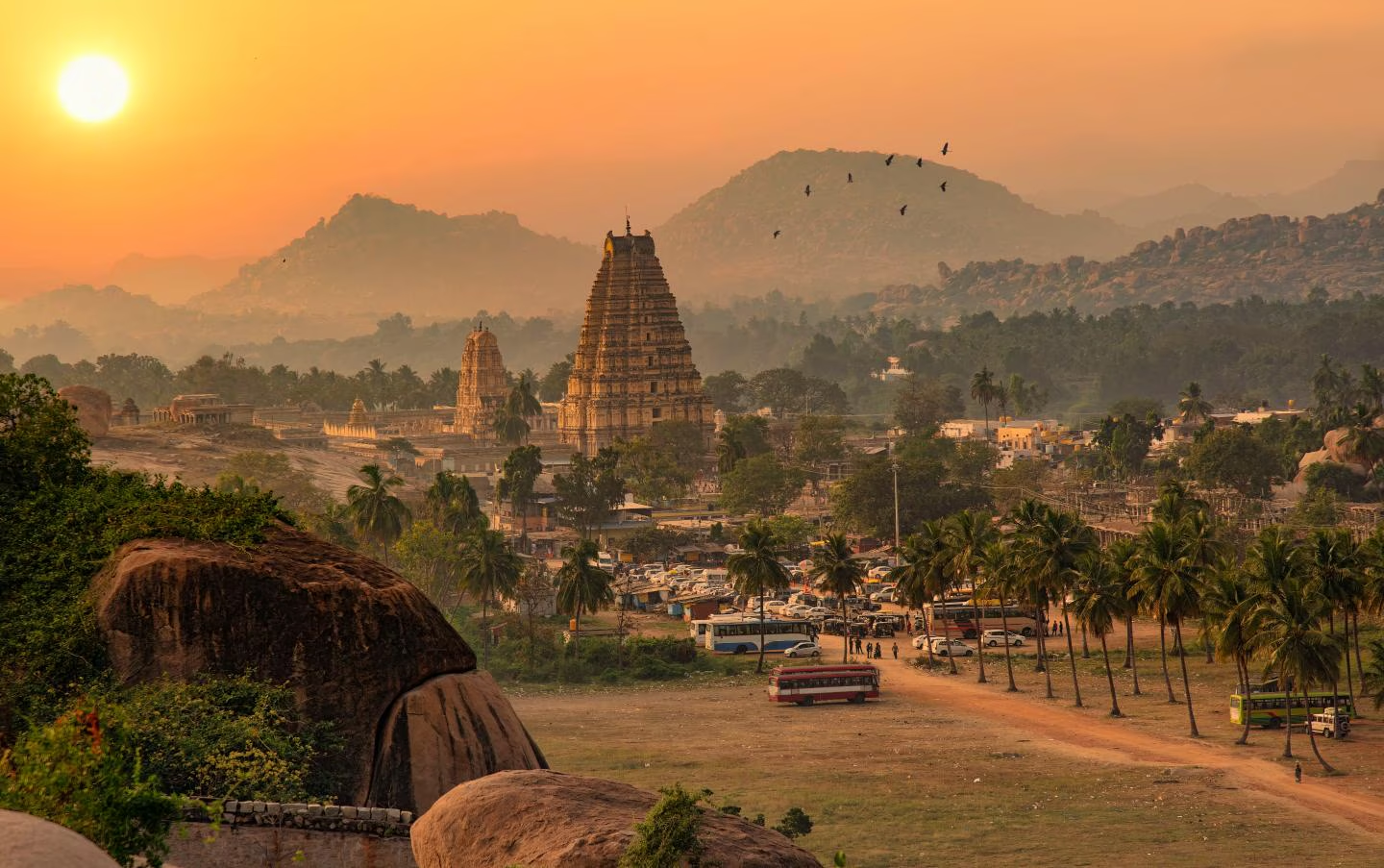
Karnataka is genuinely a year-round destination, but that doesn't mean every season suits every part of the state equally — and understanding this region-by-region, season-by-season variation is exactly what separates useful trip planning from a generic, one-size-fits-all answer. Winter, running roughly October through February, is peak season for most of Karnataka, offering the state's most broadly comfortable conditions across hill stations like Coorg and Chikmagalur, heritage sites like Hampi, and the coastal belt around Gokarna and Udupi alike. Summer, March through May, shifts the balance: hill stations remain genuinely pleasant thanks to their elevation, even as the plains and heritage sites like Hampi and Badami become intensely hot, while this same season brings strong wildlife-sighting odds to destinations like Kabini as animals congregate near water sources. Monsoon, June through September, transforms the Western Ghats entirely — waterfalls run at full force, coffee plantations turn vivid green — while demanding real caution on ghat roads and ruling out coastal swimming in Gokarna. This guide breaks Karnataka's best time to visit down by both region and season, links out to destination-specific deep dives for hill stations, waterfalls, wildlife, and heritage circuits, and covers the festival calendar worth planning a trip around — everything needed to figure out not just when to visit Karnataka generally, but when to visit the specific part of Karnataka you're actually planning to see.
Frequently Asked Questions
01. What is the overall best month to visit Karnataka?
01. What is the overall best month to visit Karnataka?
There's no single universally "best" month for all of Karnataka, since the state's diverse geography — hill stations, coastal belt, heritage plains, and Western Ghats forest — each has a somewhat different ideal window, but if forced to pick one broadly strong overall month, November stands out as an excellent all-around choice. By November, the monsoon has fully eased across the state, meaning hill stations like Coorg and Chikmagalur offer comfortable, clear conditions ideal for sightseeing and trekking, while heritage destinations like Hampi haven't yet reached the intense heat of peak summer, making outdoor ruin exploration considerably more comfortable than a March or April visit. The coastal belt around Gokarna and Udupi also benefits from November's calmer post-monsoon seas, suitable for swimming and beach activities without the rough currents of the rainy season. November additionally offers a cultural bonus for travellers interested in festivals, since the Hampi Utsav typically takes place during this month, adding a worthwhile cultural dimension for anyone combining heritage sightseeing with festival timing. December through February remain nearly as strong overall, with the trade-off of higher tourist volume and pricing given the coincidence with peak holiday season. For travellers with genuine flexibility on timing and no strong regional preference driving their trip, November offers close to the best available balance of comfortable weather across Karnataka's major tourism regions, without the peak-season crowding of the following two months.
02. Is Karnataka good to visit in monsoon?
02. Is Karnataka good to visit in monsoon?
Yes, with the important caveat that monsoon suits some parts of Karnataka considerably better than others, making a blanket yes-or-no answer somewhat misleading without this regional context. The Western Ghats — Coorg, Chikmagalur, and the broader waterfall belt around Jog Falls and the Uttara Kannada cluster — are arguably at their most visually spectacular during monsoon, with waterfalls running at full, dramatic force and coffee plantations turning a vivid, saturated green that simply isn't present during the dry season. Hampi and the broader North Karnataka heritage circuit, by contrast, offer relatively little monsoon-specific appeal, since these destinations are built around outdoor ruin exploration that doesn't specifically benefit from rain, and the region does see meaningful rainfall during this period that can make sightseeing somewhat less comfortable without offering the dramatic payoff found in the Western Ghats. Gokarna and the coastal belt see rough seas and generally discourage swimming during monsoon, though the town itself takes on a quieter, more atmospheric character that a specific type of traveller genuinely appreciates. Wildlife destinations like Kabini remain open year-round, including through monsoon, offering a lush, rejuvenated forest landscape that experienced wildlife photographers specifically seek out despite reduced overall visitor numbers during this period. The honest overall answer: monsoon is genuinely excellent for Western Ghats travel specifically, more mixed for heritage and coastal destinations, and a matter of personal preference for wildlife tourism.
03. Which part of Karnataka is best in summer?
03. Which part of Karnataka is best in summer?
Karnataka's hill stations — Coorg and Chikmagalur specifically — are the clear standout choice for summer travel, since their higher elevation keeps daytime temperatures noticeably cooler and more comfortable than the intense heat found across the rest of the state during March through May, making them a popular heat-escape destination for travellers from Bangalore and other warmer parts of South India during exactly this season. Beyond simply escaping the heat, summer also brings a genuine seasonal bonus to Coorg specifically, with coffee blossom season peaking in March and continuing into early April, adding a distinctive visual and fragrant appeal to plantation walks during this particular window. Wildlife destinations like Kabini also perform particularly well during summer, since the dry conditions force animals toward the river and reservoir in search of water, creating a genuine concentration effect that improves sighting odds for elephants and other wildlife considerably compared to the lush, dense-foliage monsoon months. By contrast, Hampi and the broader North Karnataka heritage circuit become genuinely uncomfortable during peak summer, with daytime temperatures climbing to levels that make extended outdoor ruin exploration more of an endurance exercise than an enjoyable heritage visit, making this destination one of the clearest exceptions to otherwise-workable summer travel across the state. For travellers specifically planning a summer Karnataka trip, prioritising hill stations and wildlife destinations over heritage sites and heat-exposed plains produces a considerably more comfortable overall experience.
04. When is Hampi least hot?
04. When is Hampi least hot?
Hampi is at its most comfortable, least hot period from November through February, when daytime temperatures stay within a genuinely manageable range for extended outdoor exploration of the site's largely open, shade-limited ruins, in sharp contrast to the considerably higher temperatures the destination experiences through the rest of the dry season. Within this window, December and January tend to offer the coolest, most pleasant conditions, with comfortable mornings and evenings that suit both sightseeing and photography particularly well, given the softer light during these cooler months. By contrast, the hot season running March through May brings genuinely scorching daytime temperatures that regularly climb well above 35 degrees Celsius, making the site's extensive, largely unshaded terrain a serious heat-management challenge rather than a comfortable sightseeing experience, and this period is consistently flagged by experienced Hampi travellers as the one time of year to specifically avoid unless genuinely prepared with careful early-morning-and-evening-only scheduling. Hampi's monsoon season, roughly June through September, brings moderate rainfall and somewhat lower temperatures than peak summer, though the combination of humidity and occasional heavy showers introduces its own comfort trade-offs, including muddy paths in places. For travellers whose primary concern is avoiding Hampi's heat entirely rather than accepting some trade-off in exchange for a specific seasonal benefit like the November Hampi Utsav festival, targeting December or January specifically offers the coolest, most comfortable window for exploring the site.
05. Is Coorg or the coast better in winter?
05. Is Coorg or the coast better in winter?
Both Coorg and Karnataka's coastal belt (Gokarna, Udupi, Murudeshwar) offer genuinely excellent conditions during winter, making this less a question of one being objectively better and more a matter of which specific travel experience — misty hill-station atmosphere or calm coastal beach weather — appeals more to a given traveller. Coorg's winter delivers the classic hill-station experience: cool, sometimes genuinely cold mornings, clear skies ideal for sightseeing and trekking, and a cosy, fireplace-evening atmosphere that particularly suits honeymooners and travellers seeking a romantic or contemplative retreat. The coastal belt's winter offers calm seas ideal for swimming and beach activities, comfortable but noticeably warmer daytime temperatures than Coorg's cooler hill climate, and the added appeal of temple tourism at sites like Udupi's Sri Krishna Temple and Murudeshwar's dramatic Shiva statue, giving coastal winter trips more spiritual and cultural texture alongside beach relaxation. Travellers specifically seeking cooler weather and a misty, atmospheric hill-station feel should lean toward Coorg; those wanting warmer temperatures, actual swimming weather, and a beach-plus-temple combination should lean toward the coast. For travellers with enough time available, combining both into a single extended winter trip — a few days in Coorg followed by a coastal extension, or vice versa — captures the best of both experiences within Karnataka's strongest overall travel season, without needing to choose one over the other.
06. What festivals are worth timing a Karnataka trip around?
06. What festivals are worth timing a Karnataka trip around?
Mysore Dasara, typically held in September or October, stands out as Karnataka's single most significant festival worth specifically timing a trip around, featuring the city's famously illuminated palace and the grand Jumbo Savari procession, drawing considerable domestic and international attention as one of South India's signature cultural celebrations. Hampi Utsav, usually held in November, offers a somewhat quieter but still genuinely worthwhile alternative, showcasing classical music, dance performances, and cultural programs set against the dramatic backdrop of Hampi's UNESCO ruins, appealing particularly to travellers combining heritage sightseeing with cultural festival experiences. Along the coast, Krishna Janmashtami at Udupi's Sri Krishna Temple and Shivratri at Murudeshwar both draw significant devotee crowds and offer a genuinely festive, spiritually charged atmosphere for travellers specifically interested in temple-focused festival tourism, though both come with the trade-off of considerably busier darshan queues than a standard visit. Puthari, Coorg's harvest festival typically celebrated in late November or early December, offers travellers a chance to experience genuine local Kodava culture and tradition alongside the destination's standard hill-station sightseeing. Each of these festivals adds a distinctive cultural dimension beyond standard sightseeing, though all come with the shared trade-off of increased crowds and accommodation demand during the specific festival dates, making advance booking particularly important for travellers planning a trip around any of them.
07. Is Karnataka a year-round destination?
07. Is Karnataka a year-round destination?
Yes, Karnataka functions genuinely well as a year-round destination, though which specific region or type of trip suits a given season varies considerably, making this more a matter of matching your travel timing to the right part of the state rather than there being a single closed or unsuitable season across the board. Winter (October–February) offers the broadest, most universally comfortable conditions across hill stations, heritage sites, wildlife destinations, and the coast alike, making it the safest default choice for travellers without a strong regional preference. Summer (March–May) works well specifically for hill stations and wildlife tourism, given cooler elevations and improved animal-sighting odds respectively, while becoming genuinely challenging for heritage sites like Hampi due to intense heat. Monsoon (June–September) transforms the Western Ghats into arguably its most visually spectacular season, with waterfalls and lush plantations at their best, even as it introduces real ghat-road caution and rules out coastal swimming and certain trekking permits. Rather than treating any single season as universally "off," Karnataka rewards travellers who match their specific destination choice to the season at hand — Western Ghats and waterfalls for monsoon, hill stations and wildlife for summer, and essentially everything for winter. This regional flexibility is precisely what makes Karnataka such a genuinely strong year-round travel destination compared to states with a single, narrow ideal travel window.
08. Which region should first-time visitors prioritize?
08. Which region should first-time visitors prioritize?
For first-time visitors to Karnataka with limited time, the classic hills-and-heritage combination — Mysore, Coorg, and Hampi — offers the strongest, most representative introduction to the state's overall appeal, covering royal heritage, coffee-country hill-station atmosphere, and UNESCO-level ancient ruins within a single, manageable circuit. This combination captures three genuinely distinct facets of Karnataka's identity without requiring the longer time commitment that a fuller circuit including the coast or deeper Western Ghats trekking destinations would demand, making it particularly well-suited to travellers with a standard week or slightly shorter available. For first-time visitors specifically drawn to nature and wildlife over heritage and hill-station sightseeing, prioritising Coorg or Chikmagalur alongside Kabini's wildlife safaris offers a strong alternative introduction built around Karnataka's Western Ghats and forest ecosystem instead. Coastal-focused first-time visitors, meanwhile, might prioritise Gokarna and the Udupi-Murudeshwar temple circuit for an introduction built around beaches and spiritual tourism rather than hills or heritage. The general recommendation for most first-time visitors without a strongly defined preference is the Mysore-Coorg-Hampi combination, since it offers the broadest possible sample of what makes Karnataka distinctive, while leaving plenty of genuinely worthwhile destinations — the coast, deeper Western Ghats trekking, offbeat heritage sites like Badami and Pattadakal — for a return trip once a first-time visitor has decided which specific aspect of Karnataka most appealed to them.